AI/ML Engineering
Notes on building machine learning systems — the models, and the less glamorous work of getting them into production. Much of it starts with NLP and deep learning; the newer posts are about serving, MLOps, Kubernetes and agents. Everything here is something I built, broke, or finally understood well enough to write down.
2026
- Kubernetes by Example
Everything you need to run something real, taught in order, against one project small enough to fit on a laptop and complete enough to break properly.
- Kubernetes by Example 01: The Object Model
Why kubectl apply saying “created” tells you almost nothing — and what is really going on in the ten seconds afterwards.
- Kubernetes by Example 02: Pods and Containers
It ran perfectly in Docker. You put it in a Pod and it died. Here is what a Pod actually is, and why that difference matters more than it looks.
- Kubernetes by Example 03: Labels and Selectors
Nothing in Kubernetes finds anything by name. Once you know what it does instead, half the surprising behaviour stops being surprising.
- Kubernetes by Example 04: Deployments and Rollouts
You asked for a rolling update and got a gap anyway. Here is what actually moves during a deploy, and what sets its pace.
- Kubernetes by Example 05: DaemonSets
Three replicas gave you two pods on one machine and none on another. When the whole point is to be there , you need a different question.
- Kubernetes by Example 06: StatefulSets and Jobs
Three database replicas with random names, fighting over one disk. Some pods need to be somebody — and some workloads aren't servers at all.
- Kubernetes by Example 07: Services and Ingress
Every component is healthy, and nothing can reach anything. The object that knows why is one most people never look at.
- Kubernetes by Example 08: Config and Secrets
You edited the ConfigMap. You confirmed it changed. The pod carried on with the old value, and will do so forever.
- Kubernetes by Example 09: Storage
Three restarts overnight and the buffer was empty every time. The container filesystem is writable, and that is exactly the problem.
- Kubernetes by Example 10: Requests, Limits and QoS
A pod killed with no error, and a node that is full at ten percent. Both are the same misunderstanding.
- Kubernetes by Example 11: Placement and Devices
You gave the pod permission to use the GPU node, and it went somewhere else. Permission is not direction.
- Kubernetes by Example 12: Staying Up
You added a health check and it killed every pod you had. Only one of the three probes can do that, and it was the one you picked.
- Kubernetes by Example 13: Scaling and Permissions
An autoscaler that will never scale, and a pod quietly forbidden from doing its job. Both report perfect health.
- Kubernetes by Example 14: Helm and Custom Resources
Three copies of your YAML and a station list that changes at lunchtime. One of those is a templating problem. The other needs you to write a controller.
- Kubernetes by ExampleEverything you need to run something real, taught in order, against one project small enough to fit on a laptop and complete enough to break properly.
- Kubernetes by Example 01: The Object ModelWhy kubectl apply saying “created” tells you almost nothing — and what is really going on in the ten seconds afterwards.
- Kubernetes by Example 02: Pods and ContainersIt ran perfectly in Docker. You put it in a Pod and it died. Here is what a Pod actually is, and why that difference matters more than it looks.
- Kubernetes by Example 03: Labels and SelectorsNothing in Kubernetes finds anything by name. Once you know what it does instead, half the surprising behaviour stops being surprising.
- Kubernetes by Example 04: Deployments and RolloutsYou asked for a rolling update and got a gap anyway. Here is what actually moves during a deploy, and what sets its pace.
- Kubernetes by Example 05: DaemonSetsThree replicas gave you two pods on one machine and none on another. When the whole point is to be there , you need a different question.
- Kubernetes by Example 06: StatefulSets and JobsThree database replicas with random names, fighting over one disk. Some pods need to be somebody — and some workloads aren't servers at all.
- Kubernetes by Example 07: Services and IngressEvery component is healthy, and nothing can reach anything. The object that knows why is one most people never look at.
- Kubernetes by Example 08: Config and SecretsYou edited the ConfigMap. You confirmed it changed. The pod carried on with the old value, and will do so forever.
- Kubernetes by Example 09: StorageThree restarts overnight and the buffer was empty every time. The container filesystem is writable, and that is exactly the problem.
- Kubernetes by Example 10: Requests, Limits and QoSA pod killed with no error, and a node that is full at ten percent. Both are the same misunderstanding.
- Kubernetes by Example 11: Placement and DevicesYou gave the pod permission to use the GPU node, and it went somewhere else. Permission is not direction.
- Kubernetes by Example 12: Staying UpYou added a health check and it killed every pod you had. Only one of the three probes can do that, and it was the one you picked.
- Kubernetes by Example 13: Scaling and PermissionsAn autoscaler that will never scale, and a pod quietly forbidden from doing its job. Both report perfect health.
- Kubernetes by Example 14: Helm and Custom ResourcesThree copies of your YAML and a station list that changes at lunchtime. One of those is a templating problem. The other needs you to write a controller.
2019
- How to Lie with Statistics
There is something about numbers isn’t there? They have an uncanny ability to suspend our common sense.
- Your Guide to Sentiment Analysis
Sentiment Analysis is used to discover people’s opinions, emotions and feelings about a product or service.
2017
- Sentiment Analysis for User Reviews
We create a system to assign sentiment scores to reviews (0.0 to 1.0 where a zero score is a full negative sentiment)
- Deep Learning based Email Spam Filter
We create Deep Learning based Email Spam Filter on Enron and Spam assassin dataset and compare results with Xgboost, SVM and Random forest
- Semantic Role Labeling
Semantic Role Labeling consists of the detection of the semantic arguments associated with the predicate or verb of a sentence and their classification into their specific roles.
- Statistical Inference
Statistics are the foundations of Data Analysis. Statistical Inference is a process of deducing properties of an underlying distribution by analysis of data.
- Research Summary Log
A summary log of read research papers in the field of AI
- Sentiment Analysis for User ReviewsWe create a system to assign sentiment scores to reviews (0.0 to 1.0 where a zero score is a full negative sentiment)
- Deep Learning based Email Spam FilterWe create Deep Learning based Email Spam Filter on Enron and Spam assassin dataset and compare results with Xgboost, SVM and Random forest
- Semantic Role LabelingSemantic Role Labeling consists of the detection of the semantic arguments associated with the predicate or verb of a sentence and their classification into their specific roles.
- Statistical InferenceStatistics are the foundations of Data Analysis. Statistical Inference is a process of deducing properties of an underlying distribution by analysis of data.
 Research Summary LogA summary log of read research papers in the field of AI
2016
- Meanings are Vectors
A recent big idea in natural language processing is that "meanings are vectors" . Word embeddings are one of the most exciting area of research in deep learning.
- English Grammar Analysis Demo
Grammar Analysis of English Sentences using Syntactic Rules based on English Grammar. The System is designed to be generic using only standard english grammar rules.
- NLP Modules
Various Modules from NLP Pipeline
- Simplified Switchboard Corpus
We will create a simplified version of Switchboard Speech act corpus and perform exploratory
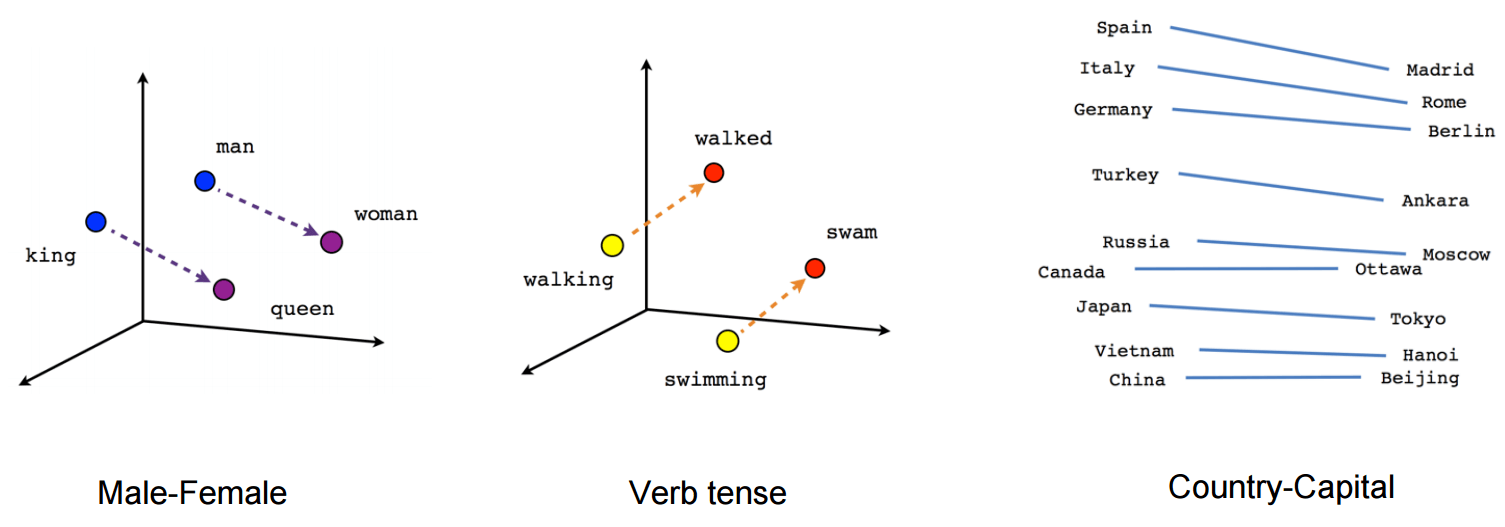 Meanings are VectorsA recent big idea in natural language processing is that "meanings are vectors" . Word embeddings are one of the most exciting area of research in deep learning.
- English Grammar Analysis DemoGrammar Analysis of English Sentences using Syntactic Rules based on English Grammar. The System is designed to be generic using only standard english grammar rules.
- NLP ModulesVarious Modules from NLP Pipeline
- Simplified Switchboard CorpusWe will create a simplified version of Switchboard Speech act corpus and perform exploratory
2015
- Syntactic parsing using Stanford parser
Syntactic parsing using Stanford parser
- Syntax in Linguistics
Syntax is the part of linguistics that studies sentence structure.
2014
- Sentence Types in English
English Sentences are broadly categorized into 5 types. Each type has a particular semantic and syntactic structure which helps for analysis of sentences at syntactic level.
- Introduction to Linguistics
The scientific study of a language is called Linguistics.
- How to create GATE plugins
How to create GATE plugins
- Sentence Types in EnglishEnglish Sentences are broadly categorized into 5 types. Each type has a particular semantic and syntactic structure which helps for analysis of sentences at syntactic level.
- Introduction to LinguisticsThe scientific study of a language is called Linguistics.
- How to create GATE pluginsHow to create GATE plugins